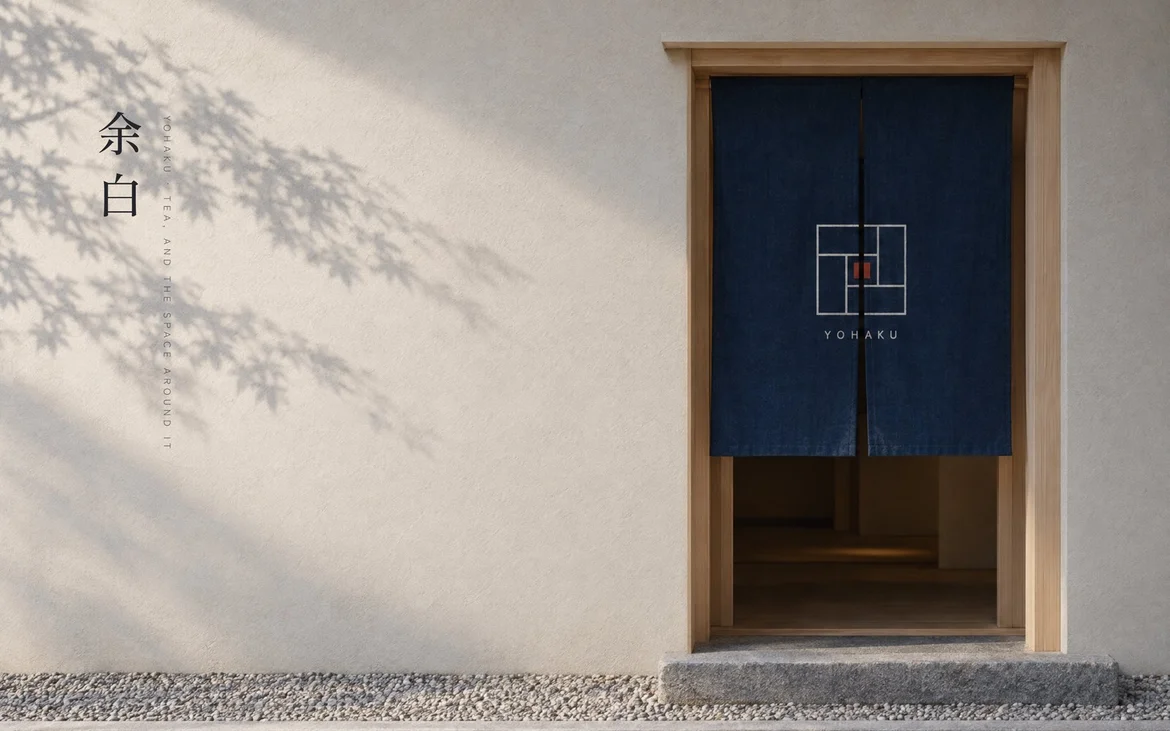
The shopfront: an indigo noren in a plaster wall, with most of the wall left empty.
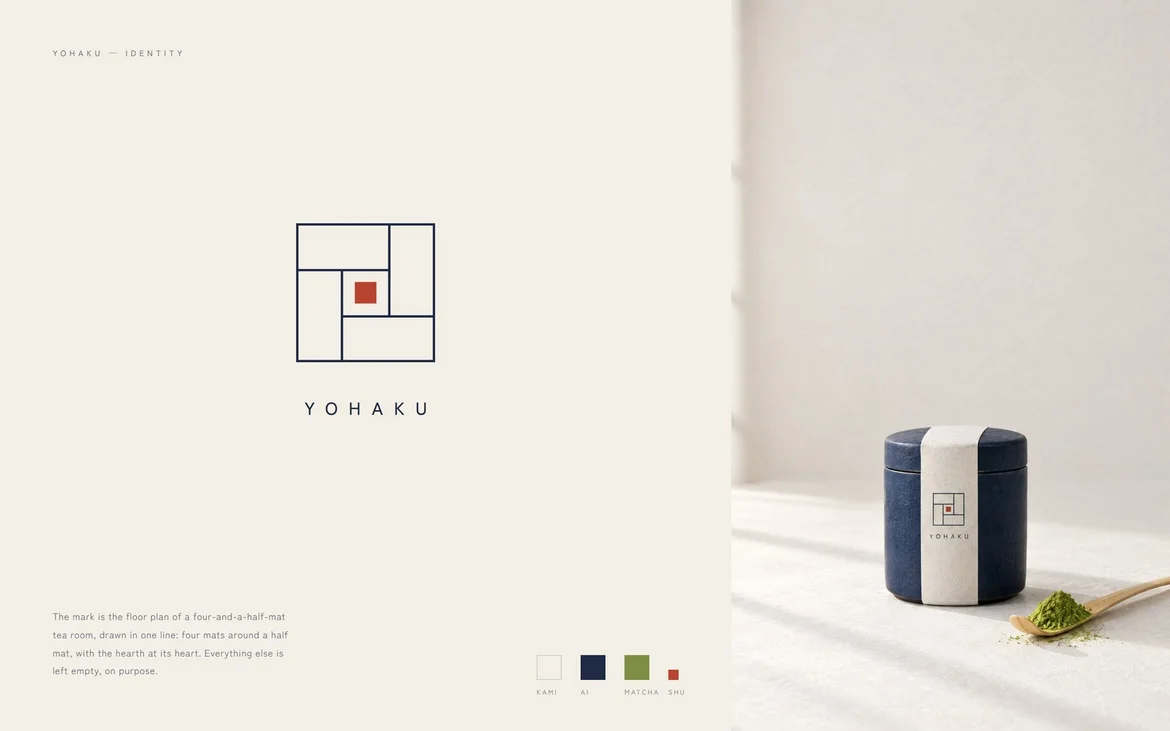
The mark: the floor plan of a four-and-a-half-mat tea room, drawn as one line, with the hearth in vermilion at its centre.
Shippori Mincho for the Japanese, Zen Kaku Gothic for the Latin; indigo, paper, matcha, and vermilion only for the hearth.
Three teas, three tins: sencha, matcha and hojicha.
The room the mark is drawn from: four mats around a half mat, and the hearth.
The menu and the card, on handmade washi.
Two posters, mostly empty paper.
The brief
Yohaku is a concept: a made-up tea house in Kyoto with one small room and a short list of teas. 余白 (yohaku) is the space left empty on purpose, in a painting, on a page or in a room.
The identity had to feel quiet enough for a tea room, and still be recognisable from across the street.
The approach
The mark is the floor plan of a four-and-a-half-mat tea room, the classic size: four mats laid around a half mat, drawn as a single line. The half mat holds the hearth, marked by the one vermilion square.
The layouts leave most of each page empty, so the mark, a vertical 余白 and a few spaced capitals have room around them.
Indigo for the curtain and the tins, paper for almost everything else, matcha for the tea, and vermilion used once, for the hearth.
The photographs are as still as the room: morning light, plaster, tatami and the steam off a bowl.
Delivered
The mark, the lockups, type and colour.
The shopfront noren, the tea tins, the menu and the card.
Now booking new projects ✦ Prices from £400 ✦ Web · Motion · Brand ✦ DM @Risendune on X ✦ Now booking new projects ✦ Prices from £400 ✦ Web · Motion · Brand ✦ DM @Risendune on X