32 · Motion design · Film · path-traced · 2026
Etch
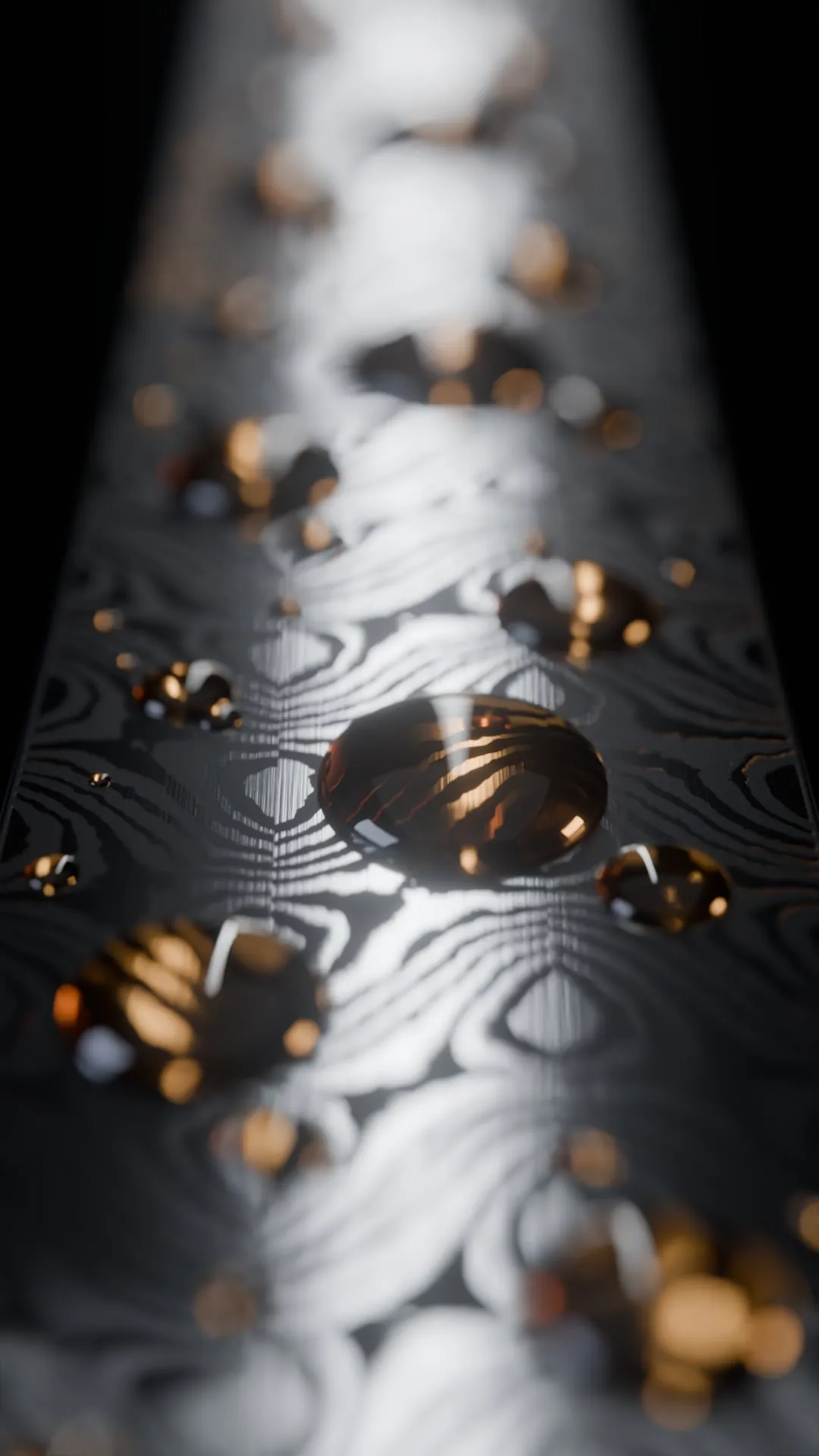
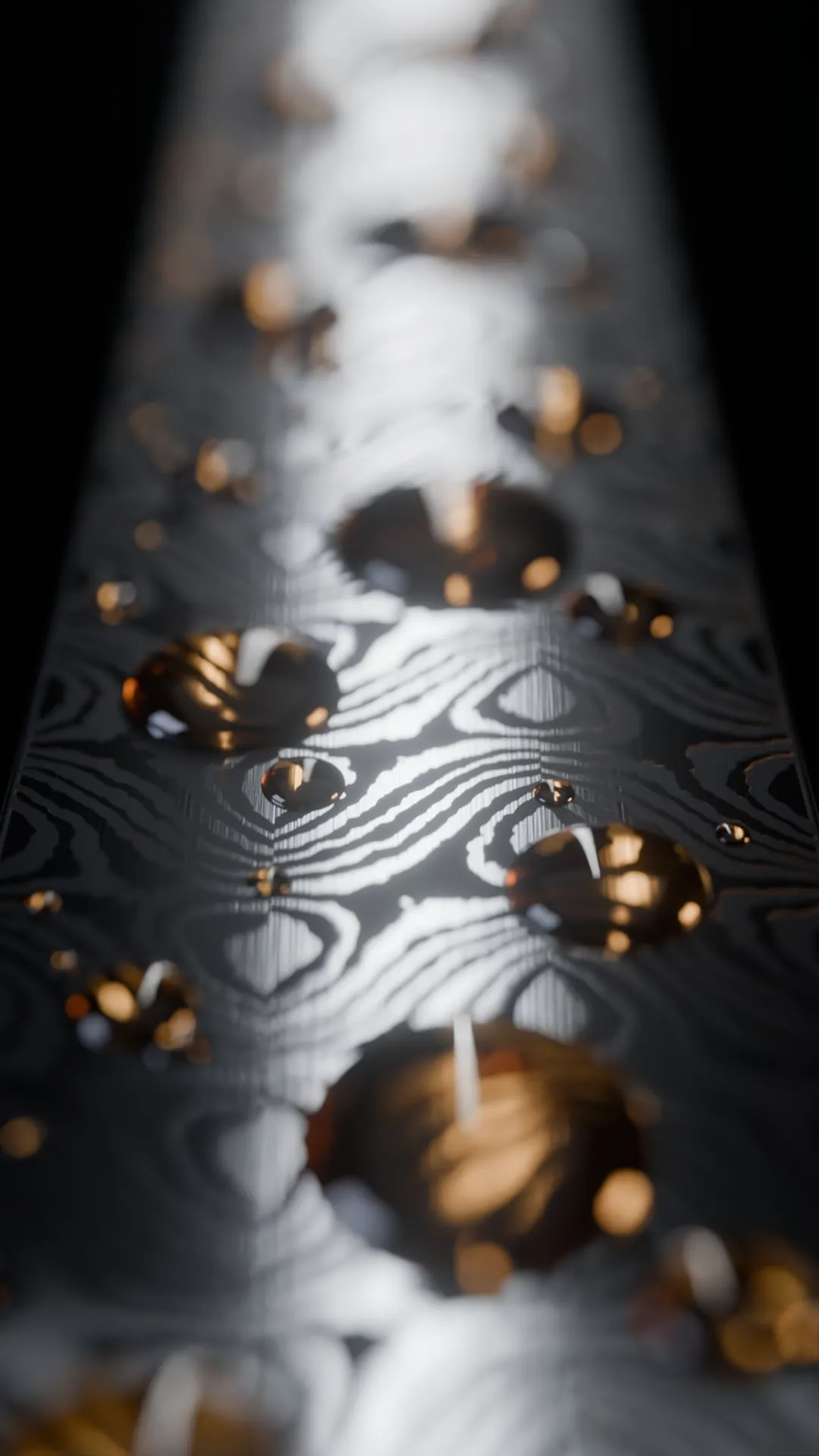
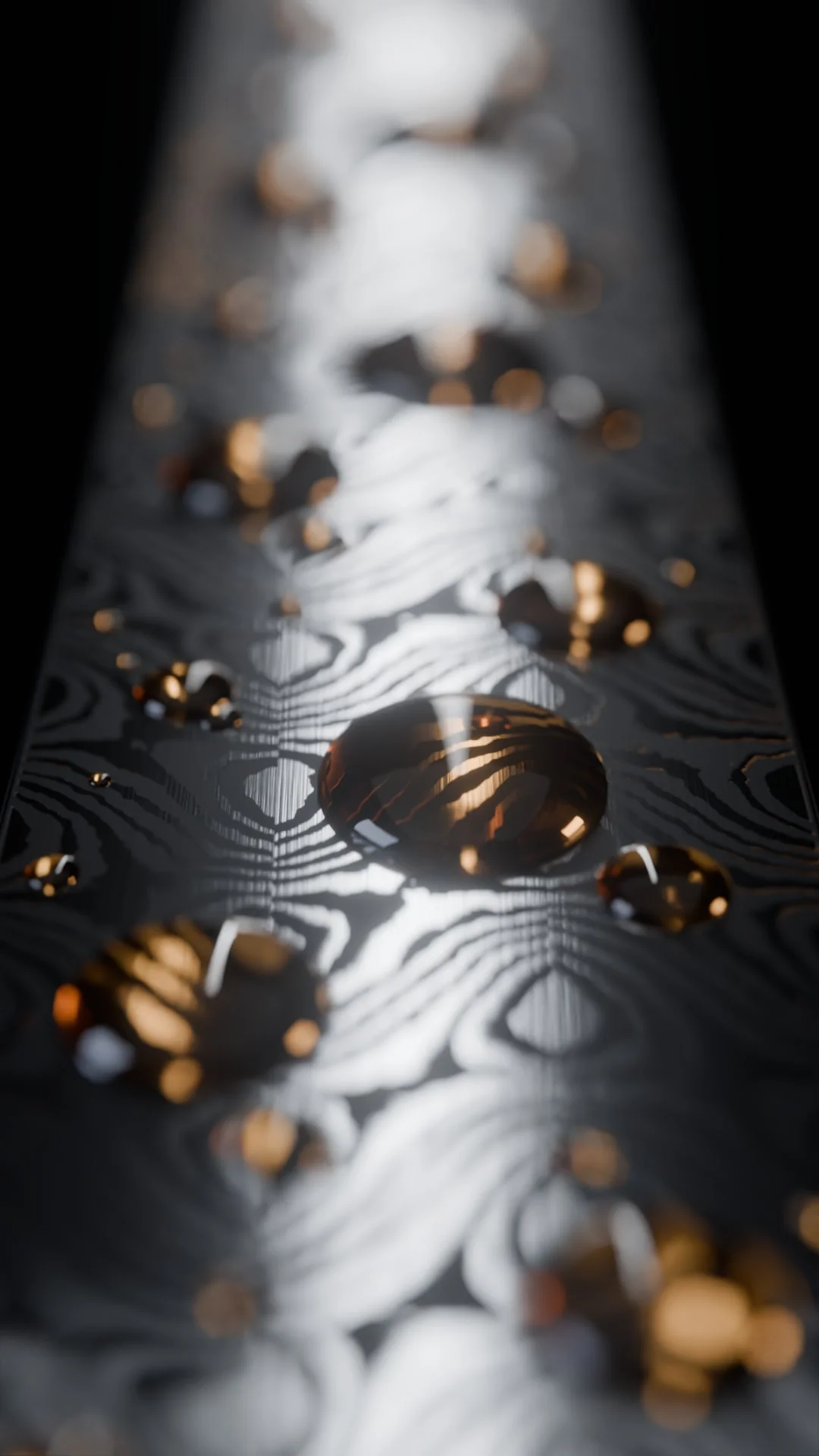
A pattern-welded blade under ferric chloride: a slow glide over amber drops that magnify the serpent pattern in the steel, each one rung like glass.
Start a project like this04 /The film
The brief
The second piece in Risendune’s work on the art of the islands, after Interlace. The early English and Norse made their best swords by pattern-welding: rods of layered iron twisted at heat, laid side by side and hammered into one bar, then ground and etched until the layers showed. Beowulf calls such a blade wyrmfāh, serpent-patterned. The Sutton Hoo sword, from about 625, is one.
The approach
The blade is built as a smith would build it. Three rods of fifteen uneven layers are twisted, the outer two one way and the middle one the other, then flattened and ground just off their centres, which turns each twist into a run of eyes and chevrons. The edges are plain steel, with a fine dark line where they were welded on.
Etching is what brings the pattern out, so the film is shot mid-etch: amber drops of ferric chloride, the smith’s acid, stand on the steel, each one magnifying the pattern beneath it. The camera glides slowly along the blade under a long strip light, whose streak sweeps across the steel and back.
It loops without a seam. The glide covers exactly two repeats of the pattern, and the drops are laid out to come round again. Each drop crosses the plane of focus on a beat, and the sound is placed there: a struck glass bowl, lower and louder the bigger the drop, over a bodhrán and a hurdy-gurdy drone.
Delivered
An 8-second vertical film path-traced in Blender, and a reel with its own sound, built to the drops.