Show the whole journey of a litre of fuel, from the rock to the moment it burns, as one continuous piece rather than a set of diagrams. It had to be detailed enough that the machines read as real machines, with sizes and timings taken from real ones.
The approach
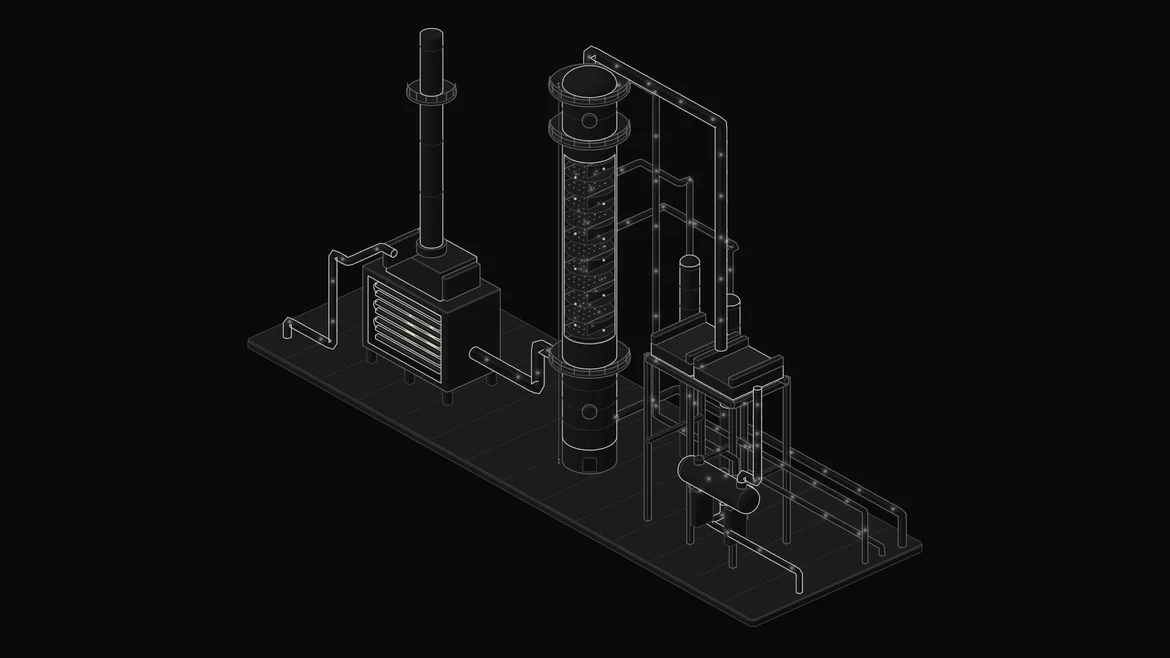
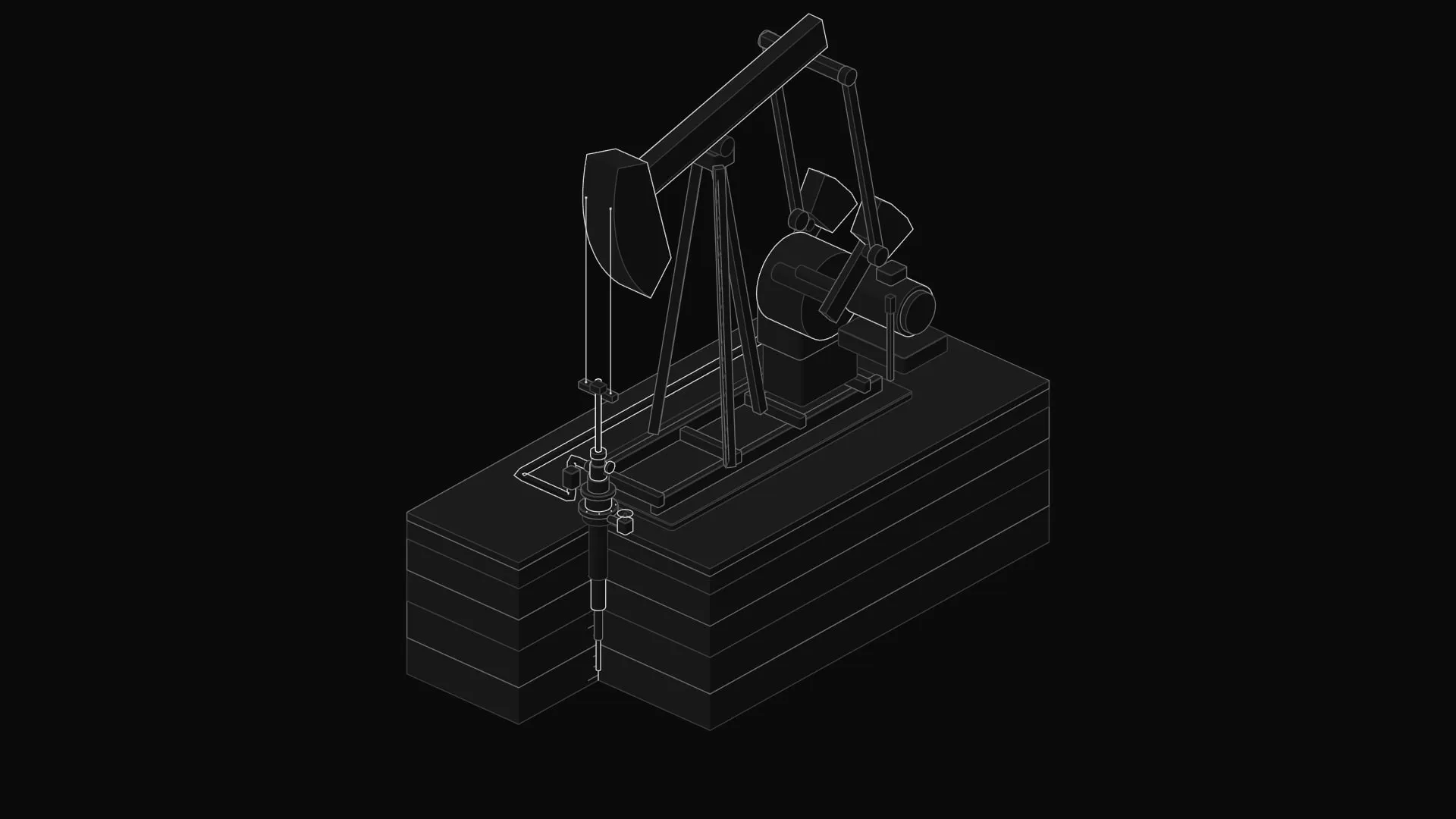
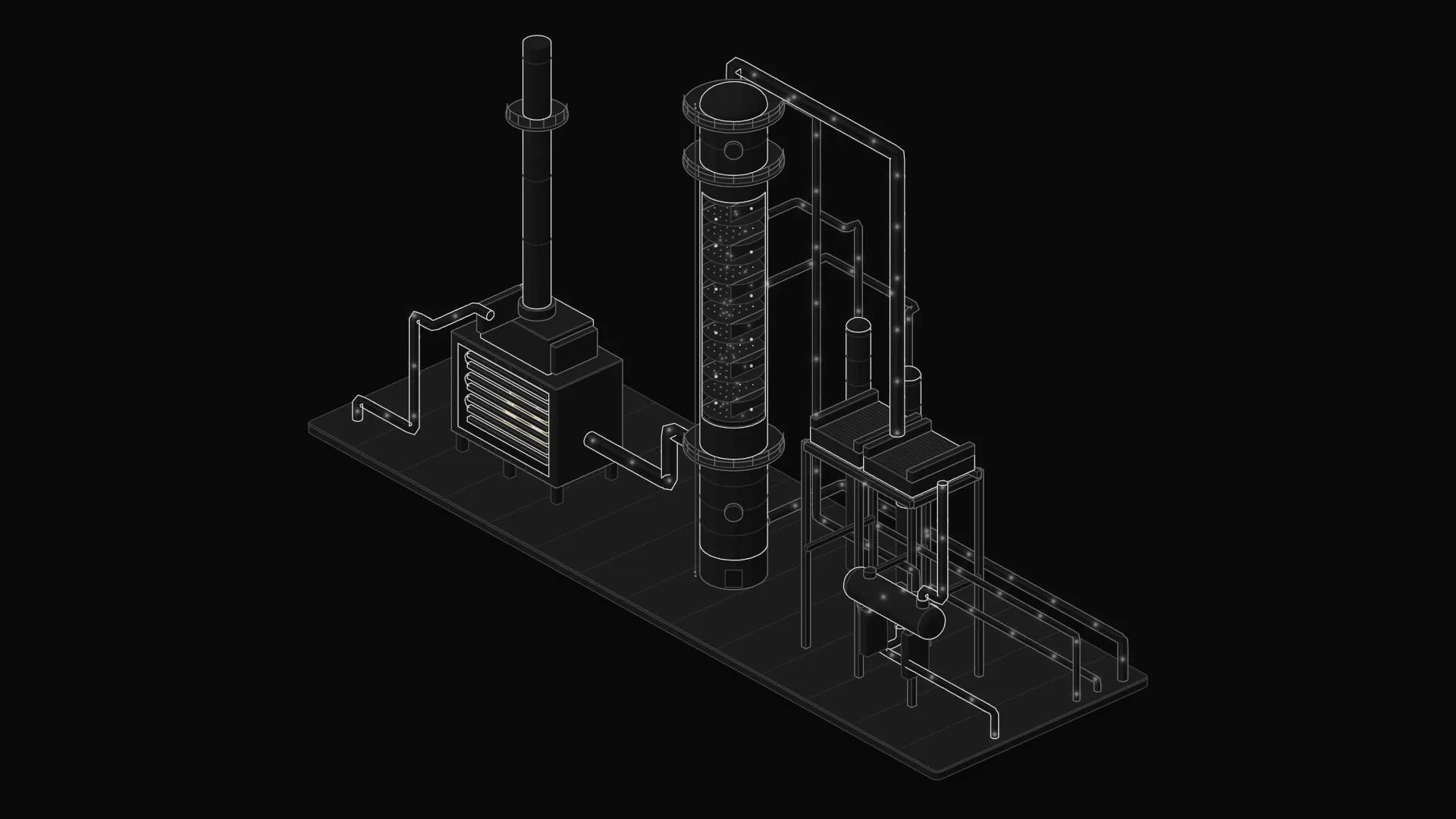
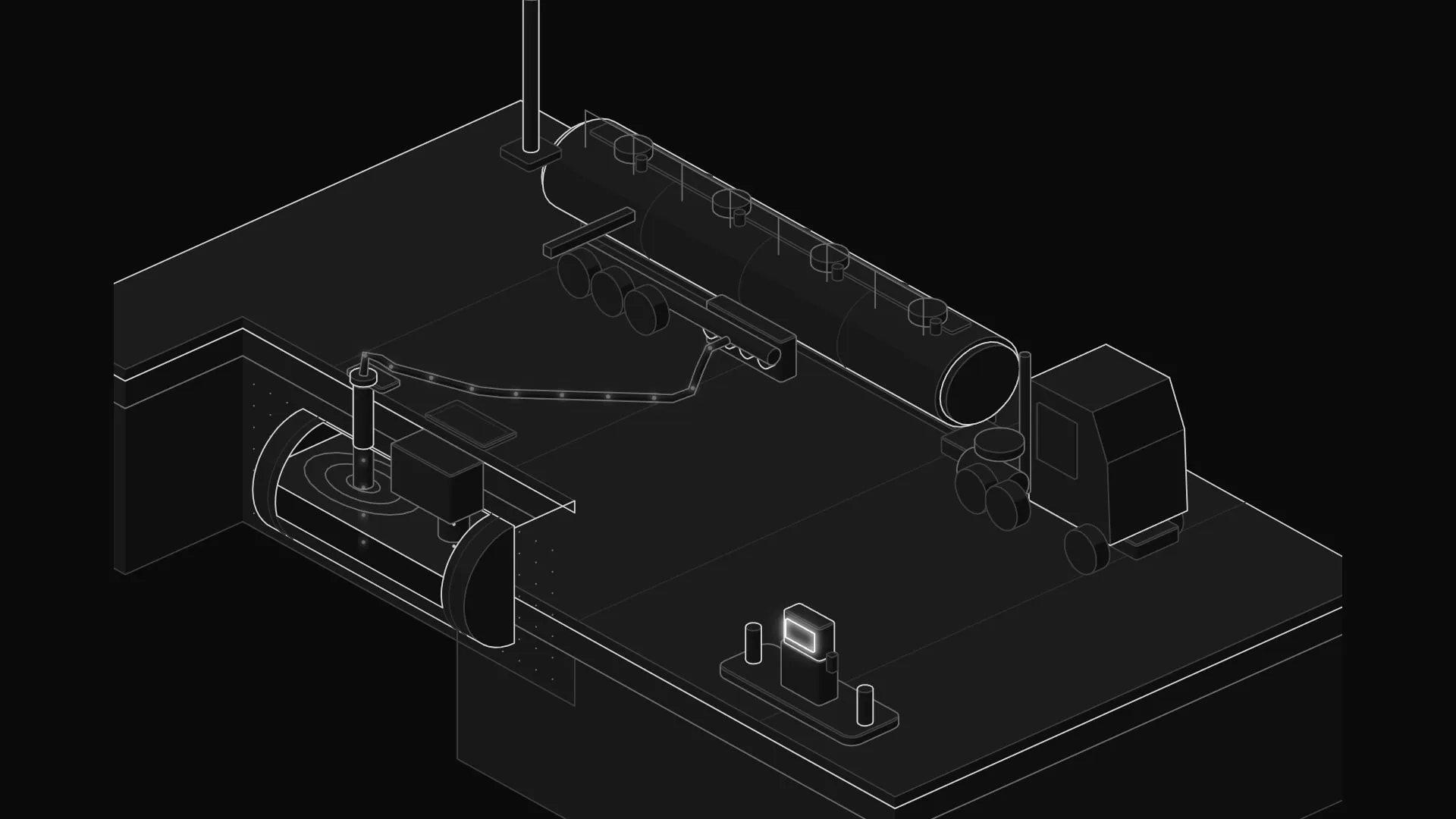
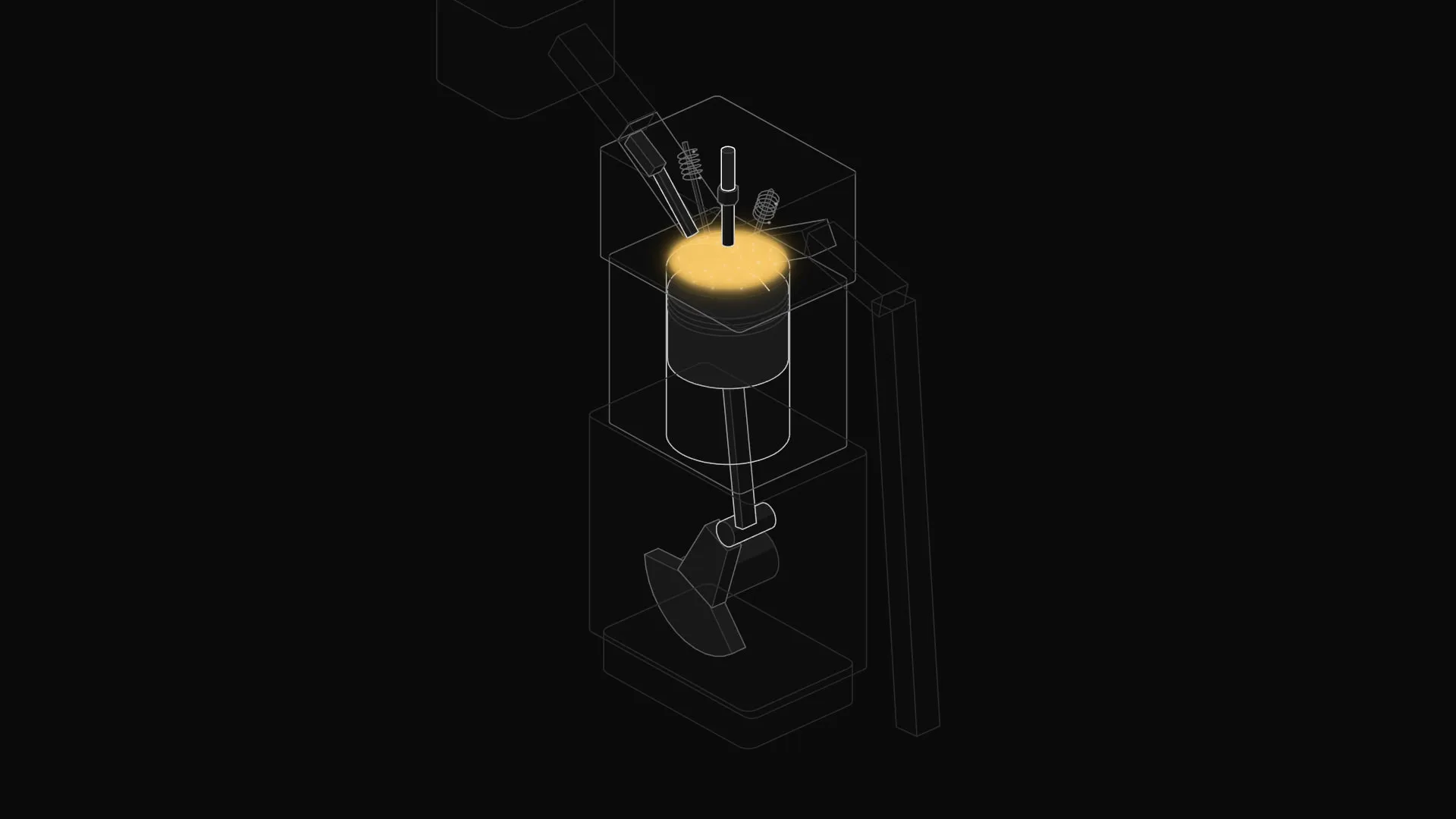
One drawing, eight camera stops. Scrolling moves the camera from the pumpjack down to the pump at the bottom of the well, across the refinery’s heater and distillation column, to a tanker dropping fuel into a forecourt tank, then into a car and finally inside one cylinder as it fires.
Every machine is modelled in 3D and drawn as an isometric line figure, with real proportions: an 86-inch-stroke pumpjack, API casing sizes, a 36,000 litre tanker, an 80 mm bore engine.
Everything moves on one clock: the beam rocks, the valves open and shut, the column’s trays bubble, the tank fills to the true level of its round section, and the piston runs its four strokes.
A geometry audit checks the models: every pipe ends on a nozzle or the ground, every part is supported, nothing passes through anything else.
Parts that give off light, like the heater’s flames and the burning charge, glow in the dark.
Now booking new projects ✦ Prices from £400 ✦ Web · Motion · Brand ✦ DM @Risendune on X ✦ Now booking new projects ✦ Prices from £400 ✦ Web · Motion · Brand ✦ DM @Risendune on X