30 · Motion design · Type film · concept · 2026
Chequer
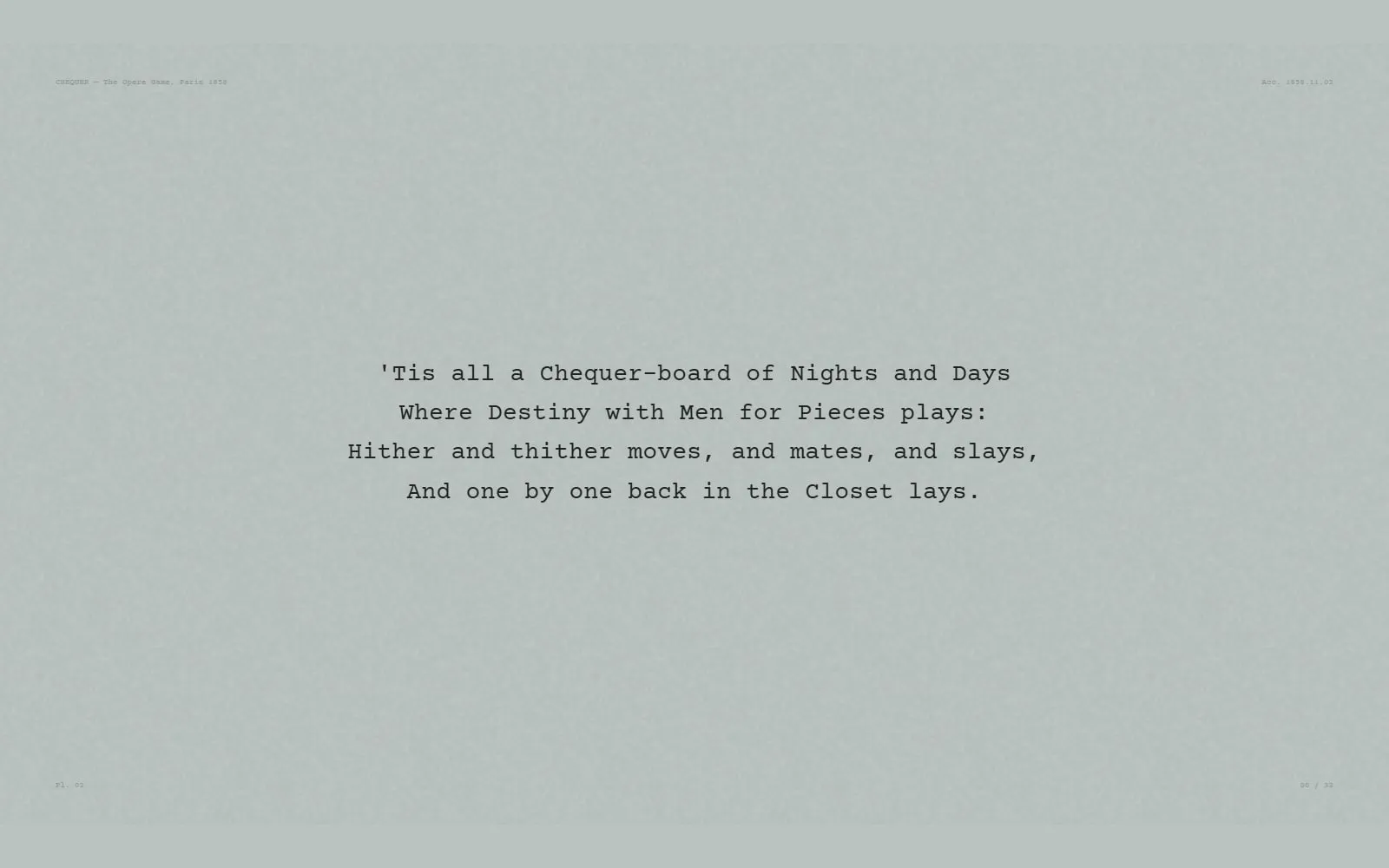
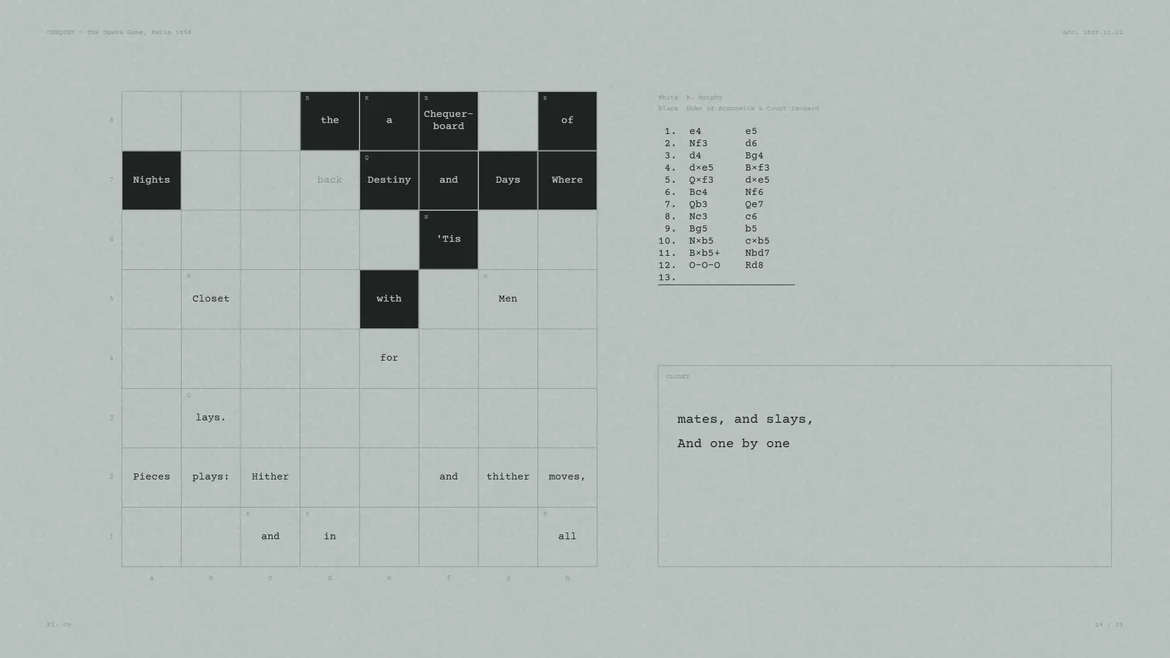
The 1858 Opera Game, played move for move by the 32 words of FitzGerald's chessboard verse, until the game has written the poem.
Start a project like this05 /The film
The brief
A chess film for the studio’s Motion work, in the manner of an archival type film: typewriter text on grey paper, archive plates, a board drawn in hairlines. It needed what the mood pieces it grew from lack: a story with an ending.
The approach
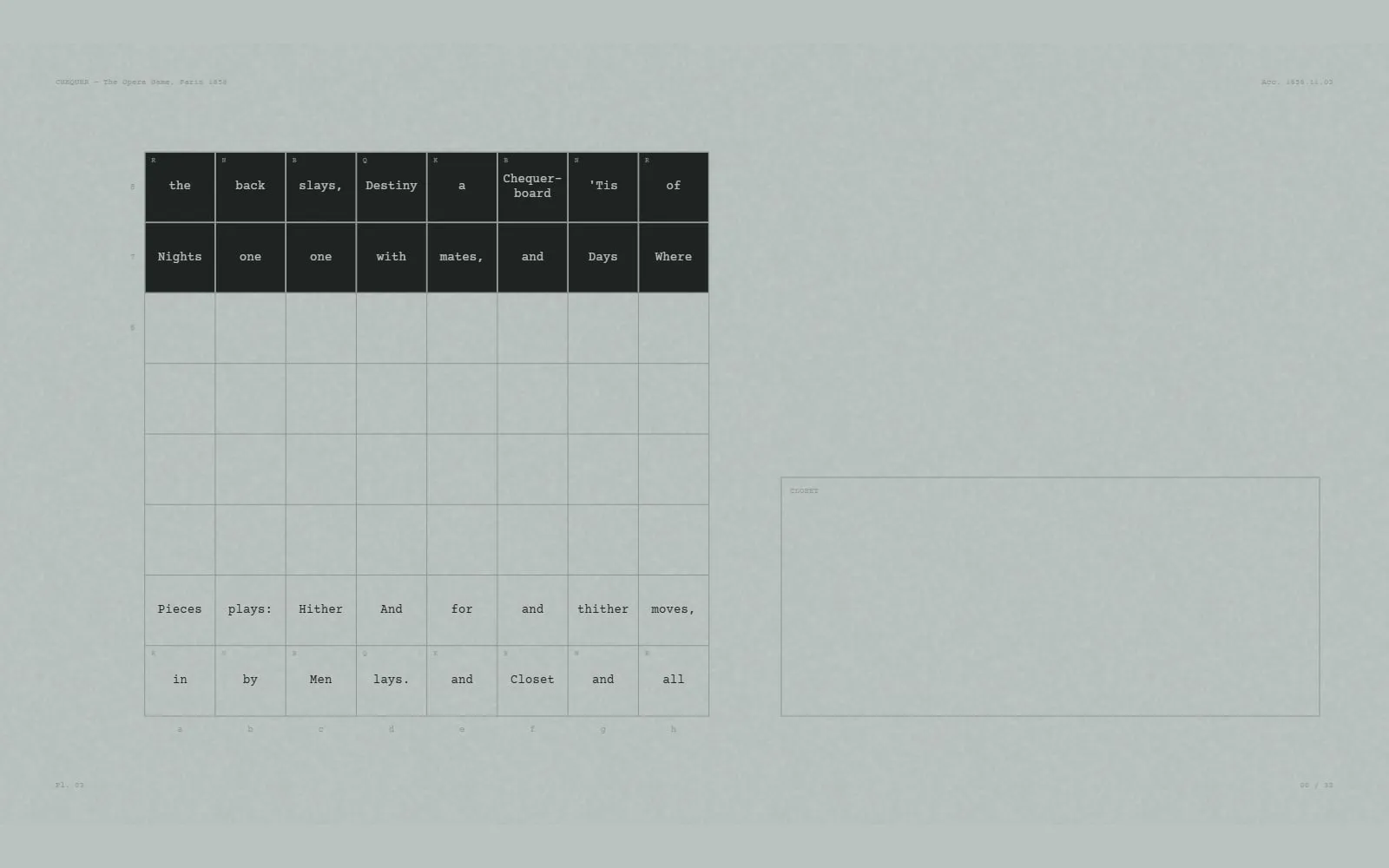
FitzGerald’s chessboard stanza from the 1859 Rubáiyát has exactly 32 words, one for every piece. Each piece carries a word, and the film plays Paul Morphy’s Opera Game of 1858 move for move.
- The verse is typed out, then scattered onto the board in scrambled order.
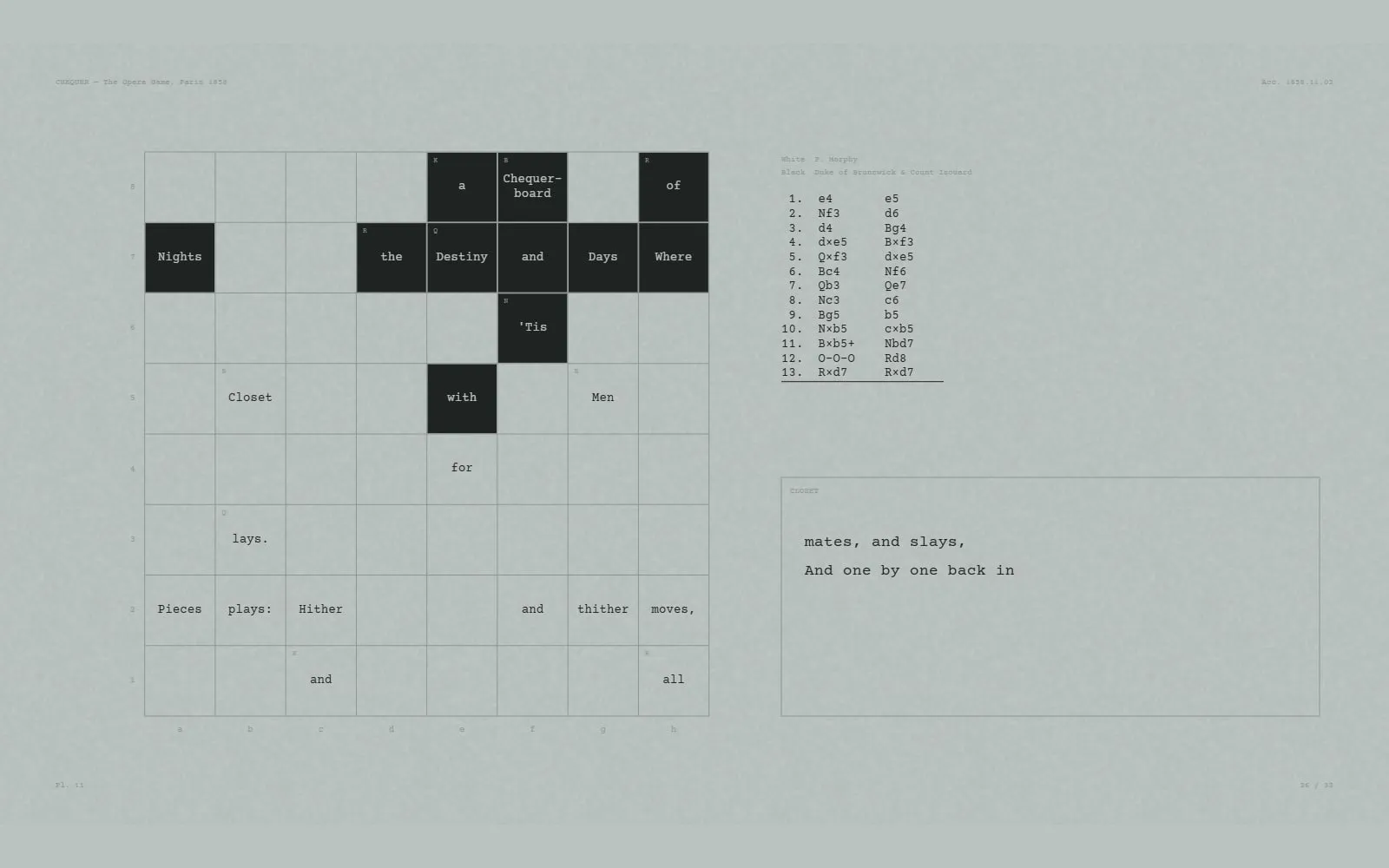
- Every capture is a typewriter correction: the taken word is x-ed out and laid “back in the Closet”, a ruled box beside the board.
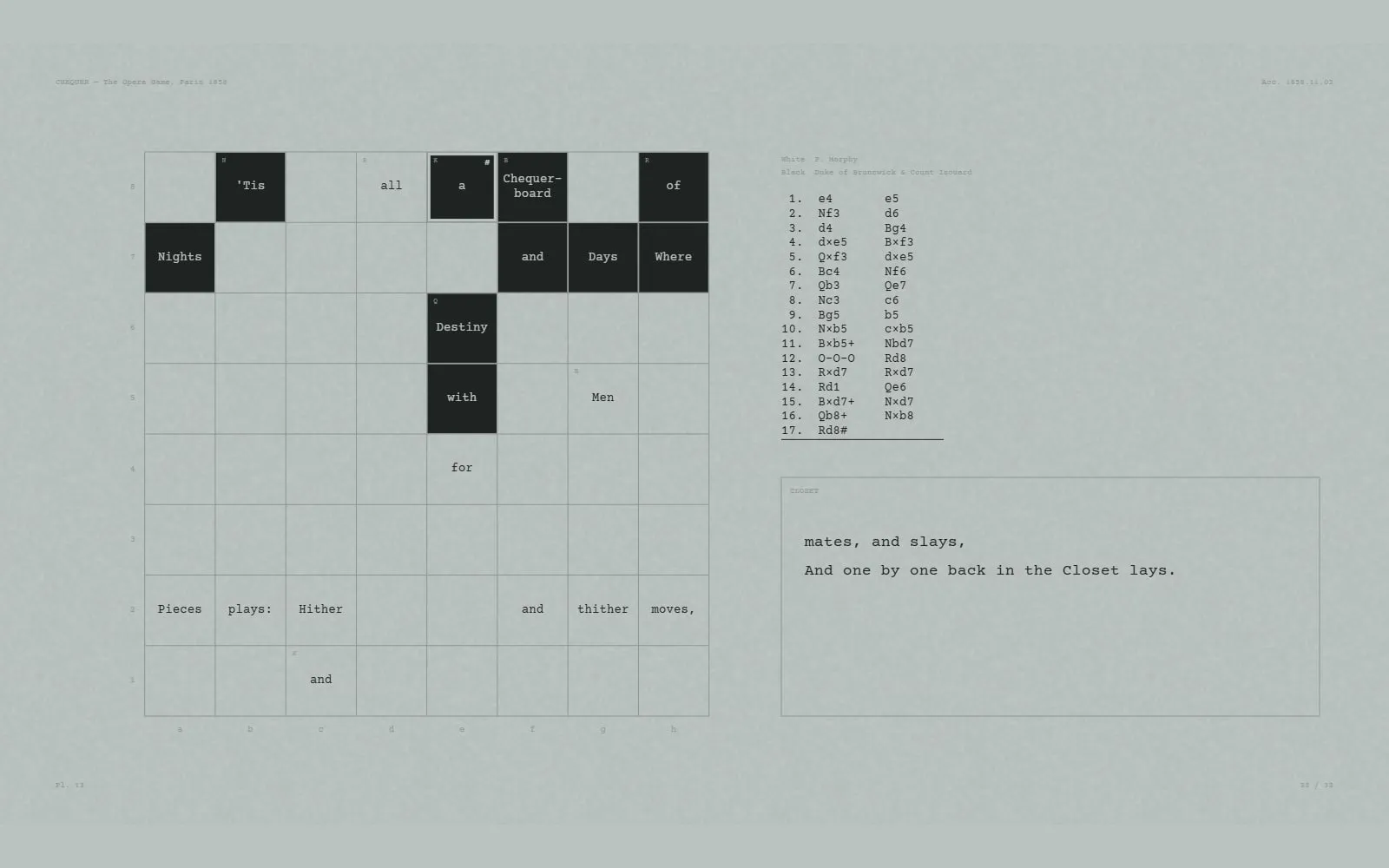
- The words are placed so that the game sorts the poem. The twelve captures, in order, spell the stanza’s last line and a half, ending with Morphy’s queen sacrifice on “lays”. After mate, the twenty survivors, read across the board, spell the rest.
- One timeline draws everything live in a 2D canvas, laid out twice: 16:9 for the site and 9:16 for Reels and TikTok. The page plays it in real time, and every frame of the video is that same picture.
Delivered
- A 56-second type film in 16:9, and a 9:16 cut laid out for phones.
- A live version that plays and scrubs in the browser.
- A loop for the portfolio’s dune field, and stills.
Sources
The stanza is XLIX of Edward FitzGerald’s first edition (1859). The game is Morphy against the Duke of Brunswick and Count Isouard, Paris, 2 November 1858. The plates are public domain, from Wikimedia Commons: Paul Morphy, 1859 (John G. White Collection, Cleveland Public Library); the Théâtre-Italien, Salle Ventadour, a lithograph by Charles Mottram after Eugène Lami, 1842 (Gallica); and Eadweard Muybridge’s The Horse in Motion, 1878.